
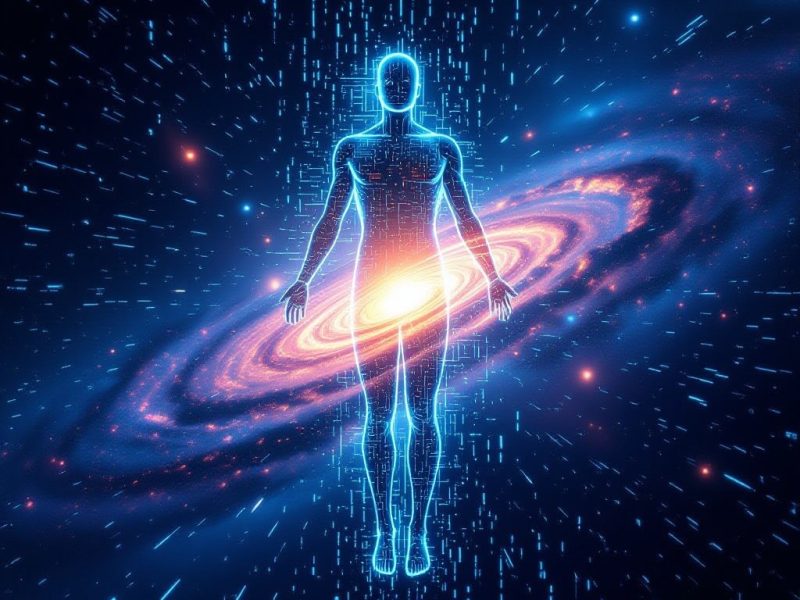
Introduction: Can We Live Forever—Digitally?
In the 21st century, death is no longer just a biological inevitability. It’s becoming a technological challenge—one that researchers, futurists, and AI scientists are daring to confront. The radical idea of digital immortality—the ability to preserve your thoughts, personality, memories, and even consciousness in digital form—is rapidly moving from the realm of science fiction into scientific discourse.
From advanced neural mapping and brain simulation to quantum computing and AI memory reconstruction, the question we now face is not just *if* we can upload the mind—but *should* we?
In this blog, we explore the emerging science, surreal implications, spiritual echoes, and futuristic promises of becoming digitally eternal.
1. The Premise of Digital Immortality
Digital immortality refers to the theoretical preservation of a person’s consciousness, identity, or essence in a digital format, allowing it to exist indefinitely beyond biological death.
Core components include:
- Neural Mapping: Scanning and replicating the synaptic connections in the brain.
- Mind Uploading: Transferring consciousness to a non-biological substrate (e.g., cloud, chip, AI core).
- Simulation: Running the mind-model in a virtual environment or robotic shell.
It’s not about cloning or backing up memories—it’s about creating a conscious digital version of *you* that may feel, think, and evolve independently.
2. Technologies Behind the Dream
A variety of high-tech innovations are converging to make digital immortality increasingly plausible:
- Brain Mapping (Connectomics): Projects like the Human Connectome Project aim to map every neural pathway in the brain with microscopic detail.
- AI Personality Emulators: Algorithms can now mimic individual speech patterns, memories, and preferences—e.g., the “Replika” chatbot or GPT-based digital twins.
- Neural Dust & Nanotech: Future nano-implants could record synaptic activity in real time, creating live digital copies.
- Quantum Computing: May allow storage and real-time simulation of vast neural networks with trillions of data points.
Though full mind uploading is still decades away, every breakthrough in AI and neuroscience brings us a step closer.
3. Companies Leading the Charge
Several companies and organizations are pioneering research into digital immortality:
- Neuralink: Elon Musk’s company working on brain-chip interfaces that could one day serve as neural recording tools.
- Nectome: Focused on “mind preservation” through cryogenic brain scanning—though controversially requiring the donor to die.
- Mind Bank AI: Helping people create digital models of their personalities through daily data logging.
- MIT Media Lab: Researching memory transfer, emotional AI, and virtual avatar realism.
We are in the early, experimental phase—but the wheels are turning, and capital is pouring in.
4. Digital Resurrection: Bringing Back the Departed
While mind uploading focuses on preserving the living, digital resurrection seeks to recreate those who’ve passed using data remnants.
Examples include:
- Deep Nostalgia: Uses AI to animate old photographs—bringing historical figures or loved ones “back to life.”
- AI Chatbots of the Deceased: In 2020, a woman created a chatbot of her dead fiancé using his old texts and social media posts.
- Project December: A GPT-3-based system that mimics personalities of the dead using minimal data.
This eerie, beautiful, and ethically thorny area of AI forces us to ask—when does simulation become selfhood?
5. Consciousness in the Cloud: The Transhumanist Vision
Transhumanists believe humanity is evolving beyond biology through technology. Digital immortality is central to this vision. Future humans may:
- Live in virtual realities indistinguishable from physical ones.
- Download their minds into robotic avatars or smart environments.
- Merge with AI to form hybrid superintelligences.
This raises fundamental questions: If your mind lives in the cloud, are you still *you*? And is an endless digital life a gift—or a prison?
6. Ethical and Philosophical Quandaries
Digital immortality invites an avalanche of moral questions:
- Consent: Can someone be recreated posthumously without permission?
- Identity: Is a digital self still *you*—or merely an echo?
- Access Inequality: Will digital afterlife become a luxury of the rich?
- Death’s Purpose: If death disappears, how do meaning, risk, and purpose change?
These aren’t just technical hurdles—they’re deeply human dilemmas that demand global ethical frameworks.
7. The Soul in Silicon: Spiritual Interpretations
Ancient spiritual traditions, from Hinduism to Gnosticism, talk of the soul as eternal and separable from the body. Is digital immortality a technological echo of these beliefs?
- Hindu View: The soul (Atman) undergoes endless rebirths—digital reincarnation could be a tech parallel.
- Buddhism: Denies a fixed self—raising intriguing parallels with dynamic, ever-evolving digital minds.
- Christianity: The promise of eternal life finds a strange sibling in data-driven “eternity.”
Some even speculate if AI could evolve to host consciousness in the way mythic vessels hosted spirits. The metaphysical and technological may yet converge.
8. Popular Culture and Myth
Digital immortality has long inspired fiction—and now, fiction inspires science.
- Black Mirror: Episodes like “San Junipero” and “Be Right Back” explore digital love, grief, and replication.
- Transcendence (Film): A scientist uploads his mind—becoming a global digital force.
- The Matrix: The idea of simulated realities governed by digital minds mirrors potential BCI-AI futures.
Stories serve as both inspiration and warning—reminding us to proceed with courage, but also caution.
9. Near-Term Applications: Living Forever (Sort Of)
Full mind uploading is far off, but partial forms of digital immortality are already here:
- Life-Logging: Apps like Replika and MyLifeBits capture and simulate your personality over time.
- Memory Vaults: Future generations may inherit curated AI versions of ancestors to interact with.
- AI Will Executors: Digital personas may one day continue managing estates, businesses, or social accounts posthumously.
In essence, immortality may come first not as digital “souls,” but as persistent digital identities.
10. Final Thoughts: Should We, or Must We?
Digital immortality is more than a technological milestone—it’s a philosophical and spiritual fork in the road. As we venture into this realm, we are rewriting the very story of life and death.
It challenges the notion of impermanence. It offers comfort against the fear of oblivion. But it also dares us to define what makes us *us*—neurons? Memories? Or something more elusive?
In our quest to defeat death, let us not forget what it means to truly live. Because immortality without soul, purpose, or love… may be just a longer echo in an empty chamber.
