
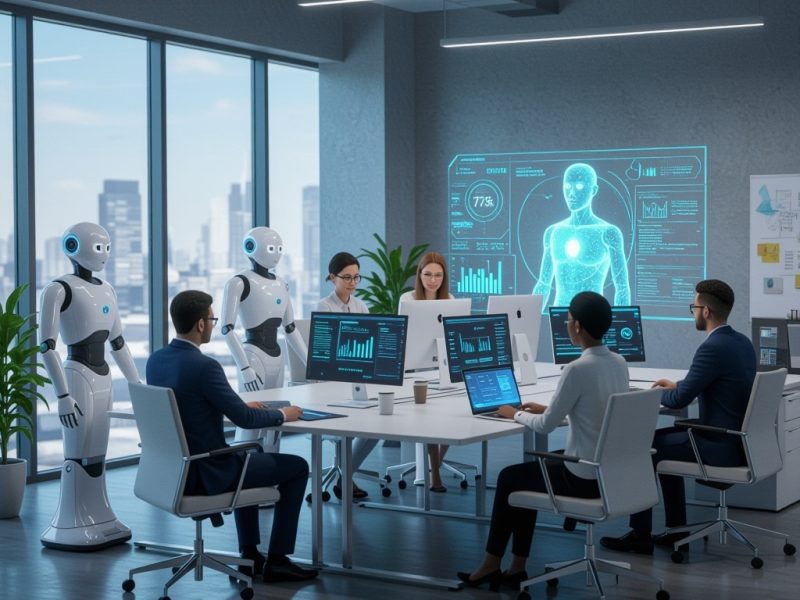
Once upon a not-so-distant past, AI was a buzzword tossed around boardrooms and sci-fi movies. Fast-forward to 2025, and AI isn’t just part of the conversation—it’s the conversation. It’s in our workflows, our calendars, our factories, and yes, even in our coffee makers. But don’t panic: the robots aren’t here to take your job… unless your job is to panic.
1. What Exactly Is “Work” in 2025?
Work is no longer about clocking in and out. In 2025, it’s about collaboration—between humans and machines. AI assistants schedule meetings, predict customer behavior, and even write your emails (no, this article wasn’t written by one… probably).
2. Remote Work Just Got Smarter
Hybrid work is the norm, but now AI schedules your days based on productivity trends. No more back-to-back Zooms. AI says: “Karen needs a break.” Thank you, SkyNet—but make it helpful.
3. Industries AI Has (and Hasn’t) Transformed
- Customer Service: AI chatbots handle 80% of inquiries before a human ever gets involved.
- Healthcare: Diagnostic AI tools now outperform junior doctors in early detection.
- Finance: Algorithms suggest investments and catch fraud faster than ever.
- Creative Industries: AI co-writes scripts, creates ad copy, and yes, generates art.
- Construction: Still largely human—though robotic bricklayers are getting scary good.
4. The Rise of the “AI Coworker”
Not a joke. In many companies, you’ll have a Slackbot as a teammate. They don’t steal your lunch or gossip, but they might outperform you in task tracking. They also never call in sick or complain about the AC.
5. Reskilling: It’s Not Optional
If you’re not learning, you’re lagging. Online AI training programs are booming. From data literacy to prompt engineering, professionals are upskilling like it’s a competitive sport—and it is.
6. The Ethical Elephant in the Room
Bias, surveillance, and job displacement are real concerns. Fortunately, 2025 has seen a wave of ethical AI standards, corporate responsibility policies, and even a few lawsuits. AI may be smart, but it’s still learning morality.
7. Freelancing + AI = Superhuman Productivity
Freelancers now use AI tools to automate editing, design, invoicing, and marketing. One person with AI is now a five-person team with slightly more coffee breaks.
8. Office Design for Human + Machine Synergy
2025 offices have AI-optimized lighting, temperature control, and productivity analytics. Some even use AR glasses for real-time collaboration. The water cooler is now virtual, and it still hosts awkward small talk.
9. The Role of Leadership in an AI-Powered World
Leaders now focus less on managing people and more on managing outcomes and ethics. Being tech-savvy is expected—but being people-savvy is priceless. Emotional intelligence is the new currency.
10. What’s Next?
Experts predict emotional AI, autonomous creative direction, and AI-powered entrepreneurship will dominate the next five years. Buckle up—it’s going to be intelligent, automated, and slightly weird (in the best way).
Conclusion
The future of work isn’t about machines replacing people. It’s about people evolving with machines. Embrace the change, learn the tools, and maybe—just maybe—make friends with your AI coworker. It might just write your next performance review.
